
Battery Health in the UAE: How to Avoid a Dead Battery in Ajman
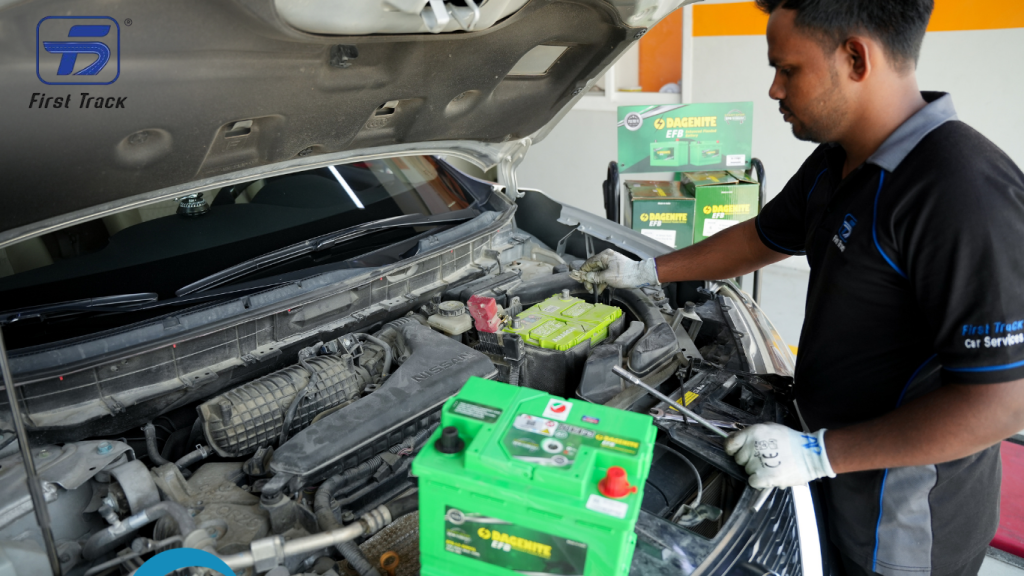
If there is one thing that haunts every driver in Ajman, it is the sinking feeling of turning the ignition key—or pressing the start button—only to be met with a pathetic, laboured click or total silence. While many motorists operate under the misconception that “winters kill car batteries,” the reality here in the UAE is far more brutal. Our relentless summer heat is the primary catalyst for premature battery failure, turning a functional battery into a dead one in the blink of an eye.
At Firsttrack Car Services, we see hundreds of battery issues every year. Understanding why these failures occur and how to spot the warning signs can be the difference between a smooth morning commute and being stranded in the sweltering heat.
The Science of Heat: Why Batteries Fail in Ajman
A standard automotive battery is a chemical device. It relies on a reaction between lead plates and a sulfuric acid solution (the electrolyte) to store and discharge energy. In the UAE, the environment is essentially a torture chamber for these chemical components.
- Electrolyte Evaporation
High ambient temperatures cause the electrolyte fluid inside the battery to evaporate over time. Once the fluid levels drop below the top of the lead plates, those plates are exposed to air. This exposure leads to sulfation—the formation of lead sulfate crystals—which drastically reduces the battery’s ability to hold a charge.
- Terminal Corrosion
Have you ever popped your hood and noticed a white, crusty powder around your battery’s terminals? That is corrosion caused by leaking battery gases reacting with the metal terminals and the humid, salty air near the coast. This corrosion acts as an insulator, blocking the flow of electricity from the battery to your starter motor.
- Added Electrical Strain
In Ajman, your battery is working harder than a battery in a cooler climate. Your AC blower, high-power cooling fans, and modern digital infotainment systems are running at maximum capacity to keep you comfortable. This continuous, heavy drain puts immense strain on a battery that is already struggling with thermal stress.
The “30-Month Rule”: Knowing When to Replace
In temperate climates, a battery might last 4 to 5 years. However, because of the constant thermal cycling in the UAE, the “30-month rule” is a much safer guideline. Most batteries in our region begin to show signs of significant degradation after approximately 2.5 years of service. Waiting until the battery “dies completely” is a strategy that almost always ends in a breakdown at the worst possible time.
Warning Signs of a Failing Battery
Your battery will almost always provide clues before it dies. If you notice any of these symptoms, bring your vehicle to Firsttrack Car Services immediately:
- The “Slow Crank”: Does the engine sound sluggish when you try to start it? That’s the sound of a battery running out of cranking amps.
- Dimming Electronics: If your interior lights flicker or appear dim when the engine is off, but brighten up when you rev the engine, your battery is struggling to provide a consistent voltage.
- Dashboard Warning Icons: An illuminated battery symbol or a persistent “Check Engine” light can often be traced back to an electrical system failure.
- Physical Swelling: If the battery case looks “bloated” or misshapen, it has been subjected to extreme heat and gas pressure. This is a severe safety risk and requires immediate replacement.
The Firsttrack Battery Maintenance Protocol
At Firsttrack Car Services, we do not believe in guesswork. We provide a total electrical health diagnostic that goes beyond just checking the battery. When you visit us, our technicians perform a comprehensive Load Test:
- Cranking Amp Check: We measure the actual power the battery delivers to the starter motor. If it falls below a certain threshold, the battery is on its last legs.
- Alternator Analysis: Sometimes, what appears to be a “bad battery” is actually a failing alternator that is not providing a proper charge. We test your alternator’s output to ensure your car’s entire charging system is functional.
- Terminal Restoration: We perform a deep cleaning of the terminals, removing corrosion and applying protective grease to ensure a clean, long-lasting electrical connection.
Pro-Tips to Prolong Your Battery Life
- Minimize Short Trips: Frequent, short drives don’t give the alternator enough time to fully recharge the battery after a cold start. If possible, ensure you take your car for a longer, steady drive on the highway once a week.
- Shade is Your Friend: Whenever possible, park in shaded areas or underground parking. Keeping the battery out of direct sunlight significantly reduces internal fluid evaporation.
- Turn it Off: Always ensure all interior lights, chargers, and the AC are turned off before you shut down the engine to reduce the startup drain for the next trip.
Conclusion
Your battery is the heartbeat of your vehicle’s electrical systems. By keeping it clean, checking its health periodically, and replacing it before it fails, you can avoid the frustration of being stranded.
Is your battery feeling sluggish? Don’t get stuck in the heat. Visit Firsttrack Car Services in Ajman today for a professional load test. It only takes a few minutes, and it could save you hours of downtime later.
Contact Number : 050 711 2565